Zahin Rahman: fostering critical thinking through One Health
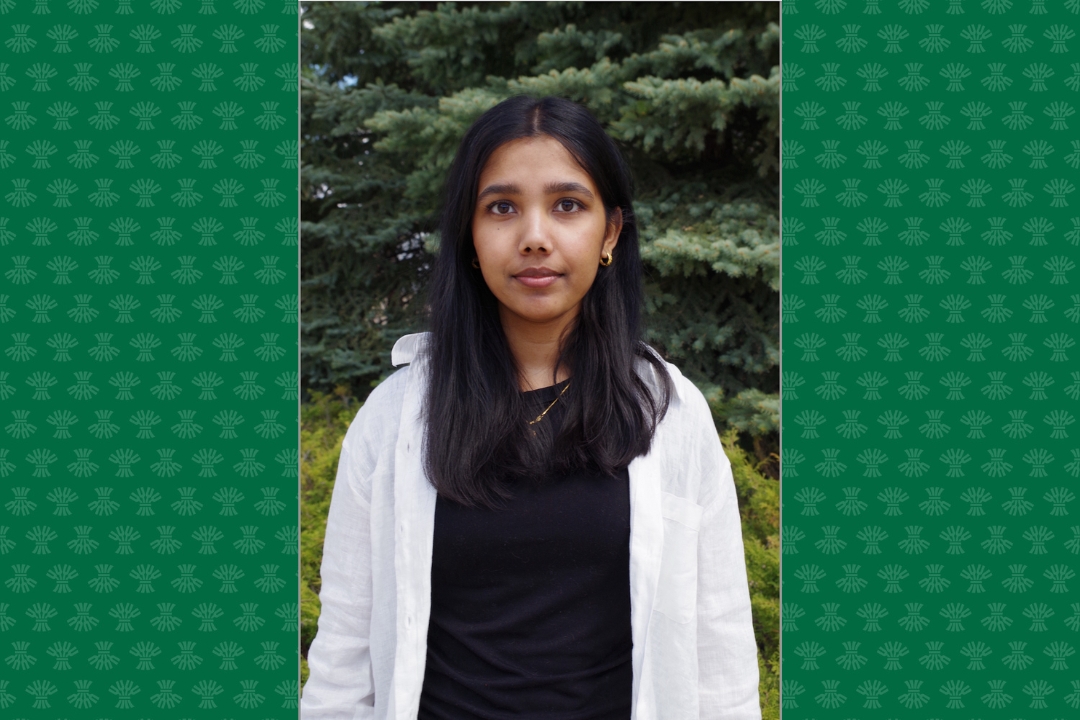
Zahin Rahman holds an Honours BSc degree in Physiology and Pharmacology from the University of Saskatchewan with a minor in French and has complemented her academic training with extensive community-based work. She works as a project facilitator at a local non-profit organization and serves as a research assistant in the Department of Community Health and Epidemiology.
In the lively classrooms of Kaberebere Town School, Zahin immediately noticed something that stayed with her: the students’ energy was not just loud — it was full of curiosity.
As she introduced the basics of One Health and the students began to warm up to her, she could tangibly feel the students in the room leaning in, eager to connect what they were learning to their everyday lives.
She asked a big, bold question: “What actions can we take to help humans, animals and the environment all at once?”
After some thinking, mumbling and murmuring, the students no longer hesitated. Ideas poured out quickly, grounded in what they knew and what they saw around them. Some suggested planting trees to improve air quality and prevent erosion, while others talked about keeping animal pens clean to stop disease spread.
A few students raised hands to discuss topics related to waste management, emphasizing the importance of protecting water sources and keeping their community clean. The classroom buzzed with energy as students realized that small, thoughtful actions could have a big impact.
For Zahin, the moment stood out not only due to the exchange of ideas, but the way students began to speak with confidence as if they were already part of the solution — despite the harsh realities they faced daily of limited resources. The activity became more than a brainstorming session; it became a lesson in empowerment.
Students began to understand that change didn’t need to come from outside help or extra resources; it could start with them, as they are.
Many students expressed to her that throughout the three months, they went home and shared their ideas with family, sparking conversations about health, hygiene and environmental stewardship.
Seeing this ripple effect, Zahin felt a deep sense of purpose in her role as a volunteer. What started as a lesson had become a spark, one that encouraged both students and Zahin to keep thinking, leading and acting. Together, they explored solutions rooted in true partnership, planting the seeds of a more prosperous future for our world.
Zahin’s key takeaways
- Community-rooted solutions: students’ ideas reflected a deep understanding of local realities and priorities.
- Confidence in leadership: when given space to lead, students — especially girls — stepped into roles of influence and responsibilities. Young girls have voices and must be given spaces to be heard.
- Change starts small: even modest, practical actions can build momentum and inspire broader community change.