


Zarif Rahman: making hygiene practical with the 'tippy tap' in Ghana
Zarif Rahman is a second-year health studies student at the University of Saskatchewan (College of Arts and Science). While he's focusing on completing his degree, he eventually hopes to be involved in directing research aimed at drug synthesis and cost efficient manufacturing that can be applied worldwide.
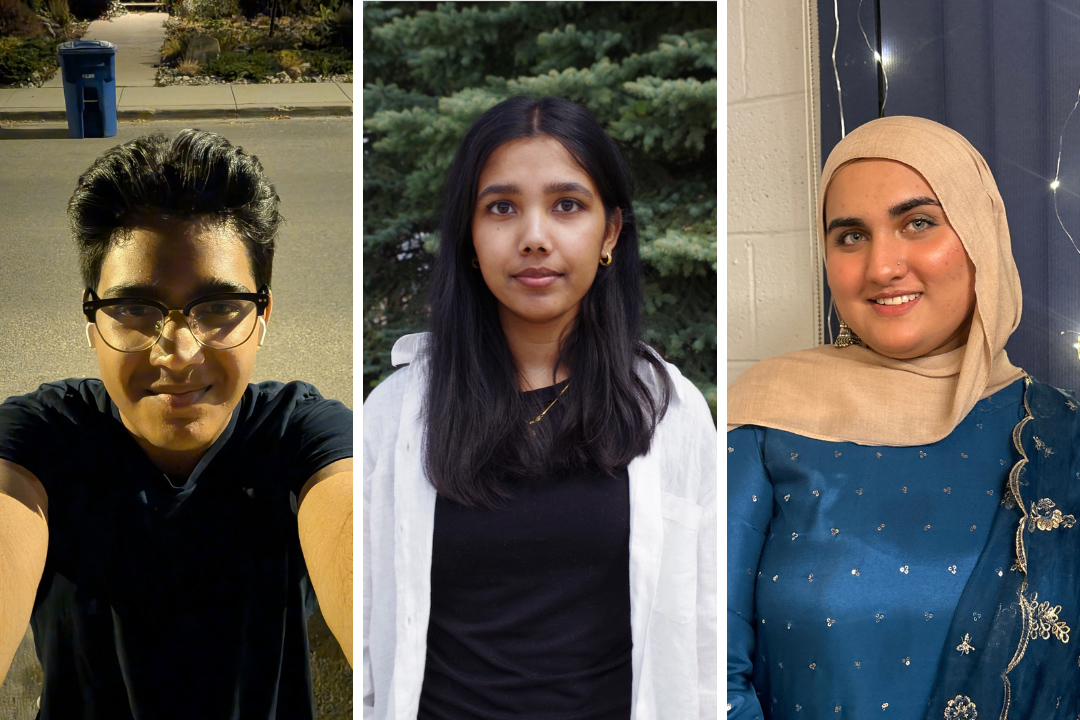
When Zarif visited schools in Soliga, Tindongo and Pelungu in the Upper East Region of Ghana, he noticed a familiar challenge: handwashing stations were shared, soap was scarce and water was often wasted.
Recognizing that sanitation protects both human and animal health, he introduced the "tippy tap" — a low-cost, hands-free handwashing device that could be built using everyday materials.
What followed was a lesson in curiosity, creativity and engagement rooted in true partnership. Students worked with the materials provided by the volunteers — sticks, string and containers, often found lying around the school — and set to work building their own tippy taps.
The classroom quickly came alive with friendly competition as groups refined their designs, tested their devices and proudly demonstrated how they worked. Through this process, students discovered that small, practical solutions can protect communities, conserve resources and improve overall community health.
Zarif watched as hands-on learning sparked ownership and pride, the essence of a partnership for a prosperous future taking root. Students were empowered to take initiative — problem-solving, innovating and realizing that their actions could make a tangible difference.
For Zarif, the greatest lesson was that with a little guidance and belief, students can be empowered to transform knowledge into lasting impact. He left inspired by the students’ creativity and confident that these simple tools could spark real change in their schools and communities.
Zarif’s key takeaways
- Innovation through simplicity: small, low-cost tools can make a big difference when they are easy to use and easy to maintain.
- Confidence through competence: students gain confidence not just by learning but by building and applying solutions themselves.
- Sustainability in practice: when students can practise new skills, those behaviours are more likely to become part of their daily life.